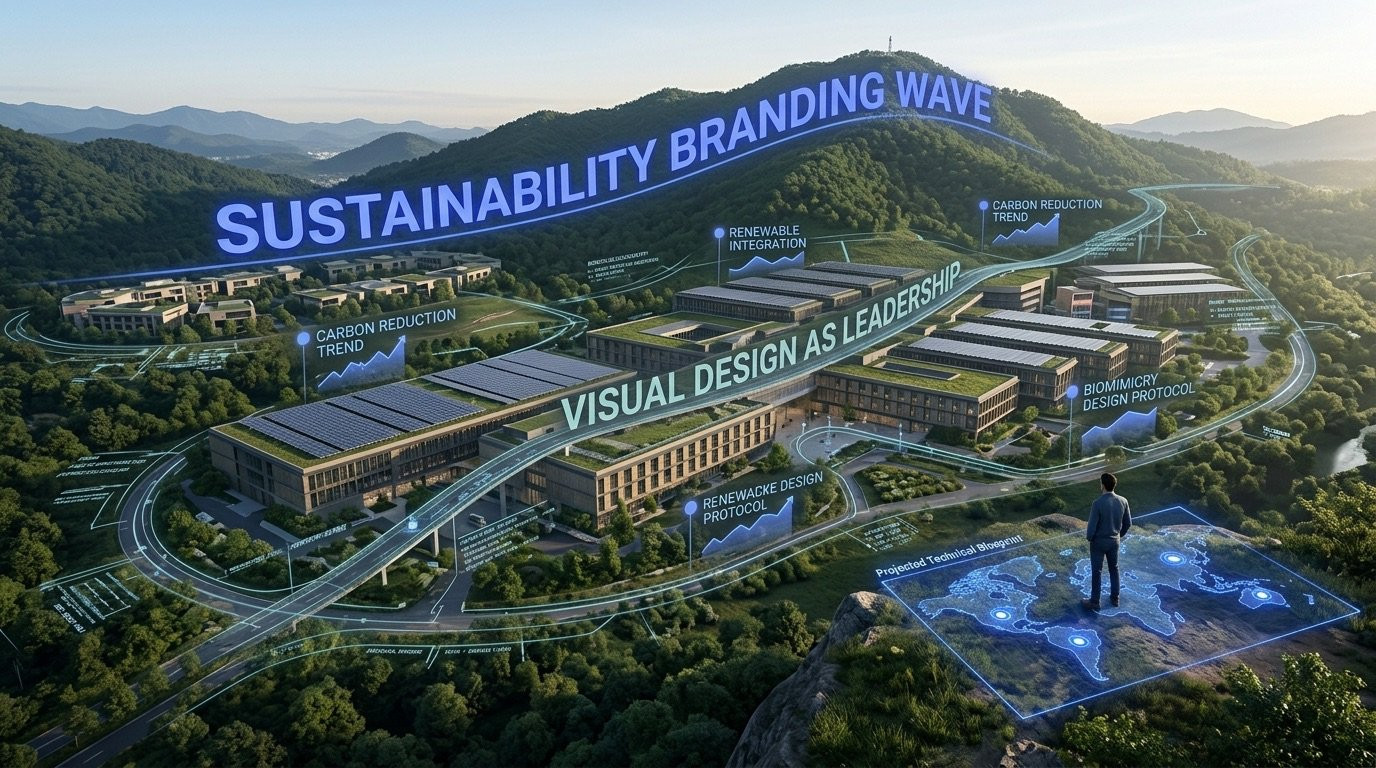
How tech brands use visual design to lead the sustainability branding wave
Sustainability branding used to be a few green leaves and a recycled-paper texture slapped on a landing page. In 2026, that “eco veneer” doesn’t pass the sniff test.
The brands winning right now treat sustainability as a visual system: flexible identity rules, credible materials-and-process cues, and digital experiences that feel clean, modern, and measurably responsible. Trend reports are also pointing in the same direction: identities are getting more adaptive (not rigid), and design is leaning into tactile, hyper-real textures that feel more human and real, as outlined in The Branding Journal’s 2026 branding and design trends and Creative Bloq’s breakdown of 2026’s shift toward texture and tactile warmth.
Below is how leading tech brands are using visual design to build trust, stand out in crowded markets, and align with circular economy expectations—without turning their brand into a nature poster.
Why sustainability visuals hit different in 2026
People don’t just want claims. They want signals they can recognize fast—especially in tech, where products can feel abstract.
The strongest sustainability-forward visual identities communicate three things at once:
- Purpose: why you exist beyond profit
- Proof: signals that you’re operationally serious, not performative
- Performance: the product is still premium, innovative, and worth switching for
This is why so many green-tech leaders default to clarity, restraint, and “engineered” cleanliness instead of overly decorative eco tropes.
Clean, adaptive design systems (the flexible identity advantage)
One of the biggest branding shifts is the move from fixed logos and strict palettes to responsive systems that adapt across channels—web, app UI, video, OOH, packaging, even product interfaces. You can see this trend called out directly in Design Shack’s 2026 branding trends, which emphasizes motion and flexibility as part of the brand system—not a finishing touch.
For sustainability branding, flexibility is more than a trend. It’s practical:
A modular system helps you scale campaigns (and new product lines) without constantly redesigning assets—which reduces creative waste, speeds up launches, and keeps your brand consistent.
If you’re building or refreshing a digital identity, this is where strong execution matters. A brand system only works if it’s implemented in real interfaces—navigation, templates, interactions—not just a Figma file. That’s why our teams typically align the identity with conversion-first UX during web design and back it with scalable web development that doesn’t break when you grow.
Eco-friendly palettes that feel premium (not preachy)
Eco palettes are evolving. Instead of loud “recycle green,” brands are leaning into muted nature tones, deep neutrals, off-whites, and oceanic blues—colors that communicate calm, stability, and long-term thinking.
Two practical rules for tech brands:
1) Build a palette that supports accessibility
Sustainability and accessibility should be teammates, not trade-offs. High contrast, readable typography, and clear hierarchy reduce friction—especially on mobile and in bright environments.
If your palette looks great but fails contrast checks, your “trust” story takes a hit immediately.
2) Use color as a system, not a decoration
In a flexible identity, color often becomes “themes” (moods) that shift by context (product line, region, audience segment) while still feeling like one brand.
That’s how you avoid the classic trap: everything looks eco… and identical to every other eco brand.
Fluid logos that “move like nature” (without getting gimmicky)
Fluid logos are trending because they mirror what sustainability brands are trying to represent: adaptation, regeneration, transformation. They also perform well in motion systems for modern touchpoints (short-form video, UI micro-interactions, animated brand marks), which is also reinforced by both The Branding Journal and Design Shack trend reporting.
Notpla: purpose built into the mark
Notpla is a great example of a brand embedding mission into identity. Their story—seaweed-based packaging that disappears—naturally lends itself to organic forms and motion. The Dieline’s feature on Notpla’s rebrand is a useful reference point, and you can see how the visuals and messaging reinforce each other on Notpla’s official site.
The lesson for tech marketers: if your logo can communicate your mission in one second, you’ve reduced the burden on ad copy to “explain everything.”
Tesla Energy: minimal structure, high-contrast confidence
Tesla’s broader brand is famously minimal and performance-forward. Sustainability is present, but the visuals are more about engineering confidence than eco symbolism—high-contrast layouts, restrained design, and product-led imagery. You can see the product-first, “clean confidence” positioning directly in Tesla’s Energy experience.
That approach matters in crowded markets: it signals “this is real tech,” not just values.
Hyper-realistic textures (the trust shortcut)
After years of flat design everywhere, 2026 branding is bringing texture back—grain, depth, tactile materials, and “real-feeling” surfaces that imply honesty and craft. Creative Bloq’s take on texture and tactile rebellion captures why this is accelerating, while Adobe’s 2026 trend coverage—especially “All the Feels”—leans into sensory, immersive visual direction (see Adobe’s marketing trends for 2026 and the Adobe 2026 Creative Trends PDF).
For sustainability brands, texture is doing a specific job: it replaces vague eco-claims with material cues.
Examples of texture choices that tend to read as “credible”:
- Subtle paper grain (restraint, responsibility)
- Natural fibers / organic imperfections (authenticity)
- Soft-touch gradients and lighting (premium + modern)
- Recycled-material patterns (proof signals)
How these design choices support circular economy goals
Circular economy alignment is partly operational (materials, supply chain), but your branding has to make it understandable. If your team needs a crisp shared definition, Ellen MacArthur Foundation’s circular economy overview is a solid baseline.
Visual design helps by making circularity feel tangible:
- Icons that clearly communicate reuse/refill/return flows
- Photography that shows durability and real-world use
- UI that makes “repair, replace, recycle” options easy to find
- Packaging visuals that reduce ink-heavy complexity and encourage correct disposal
Just as important: your digital experience should avoid “sustainability theater” (heavy, slow pages, bloated video, massive uncompressed images). If you want your brand to feel responsible, build responsibly.
A great starting point is a website assessment to identify what’s hurting performance, UX clarity, and measurement—then tie improvements to outcomes.
Actionable playbook for digital marketers (what to do this quarter)
Here’s what we recommend when you want sustainability to become a competitive edge, not a campaign theme.
1) Turn sustainability into a repeatable visual system
Define rules for:
- Logo behavior (static, responsive, motion versions)
- Color themes by use-case (product, investor, consumer, UI)
- Texture usage (when it’s allowed, where it’s sourced from visually)
- Photography style (lab, field, customer, materials, manufacturing)
Then operationalize it through templates your team will actually use.
2) Build proof into the design, not just the copy
Use visual hierarchy to surface real signals:
- Certifications (placed with restraint, not clutter)
- Product specs and lifecycle outcomes
- Material sourcing explanations with simple diagrams
- Before/after impact visuals that are easy to scan
3) Measure what “trust” does to revenue
Sustainability branding is marketing—so treat it like performance marketing.
Track:
- Conversion rate lift on sustainability-led landing pages
- Scroll depth on proof sections (materials, sourcing, lifecycle)
- Demo requests / add-to-cart rate after proof modules
- Return visitor rate from trust content
If you want the sustainability identity to drive growth (not just likes), pair the visual system with search engine optimization and a content engine that earns authority over time—exactly what we build through content marketing services and search engine optimization.
And if you’re in eCommerce, it’s worth tightening the full journey—visual trust, page speed, and UX—using conversion principles like the ones we cover in Shopify conversion rate optimization tips and how to optimize your Shopify store for higher conversions.
Quick reference: sustainable visual design choices that perform
| Visual choice | What it signals | Common pitfall | Better approach |
|---|---|---|---|
| Muted eco palette | Calm, credibility, long-term thinking | Looks like every other “green” brand | Build a palette system with distinct neutrals + 1–2 signature accents |
| Fluid/dynamic logo | Adaptation, transformation | Feels trendy or inconsistent | Create clear rules for where motion is used (and where it’s not) |
| Hyper-real texture | Honesty, craft, material truth | Random grain as a style filter | Tie texture to product, material, or process cues |
| Minimal, high-contrast layouts | Engineering confidence, clarity | Cold, sterile, “corporate” | Add warmth through human photography and micro-interactions |
| Circularity visuals (icons/diagrams) | Transparency, usability | Over-explaining, clutter | Use simple modules + progressive disclosure (details on demand) |
Logos get more fluid, textures get more real, and palettes get more grounded—but the winners don’t chase trends. They build flexible systems that make sustainability feel obvious and believable, then measure how that belief turns into pipeline, sales, and retention.
If you want help translating sustainability into a visual system that actually performs, start by aligning brand, UX, and implementation through web design + web development, then validate it with a website assessment so the experience stays fast, credible, and measurable.